Ceramic petrography and archaeometry for archaeology
An independent laboratory for the study of ancient ceramics and archaeological sediments.
Directed by Dr. Paula Waiman‑Barak
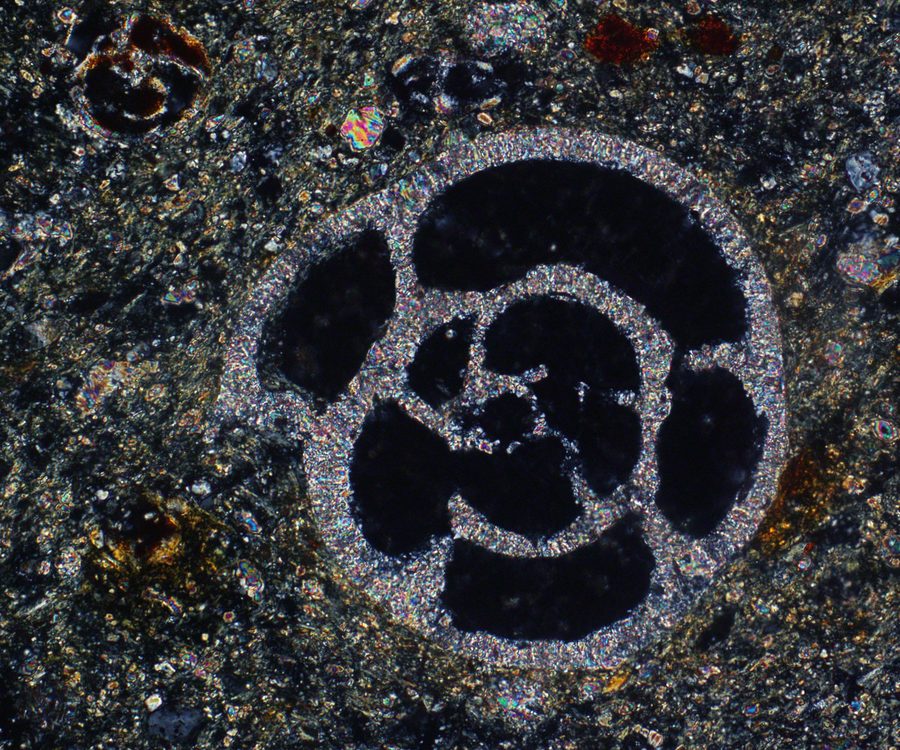
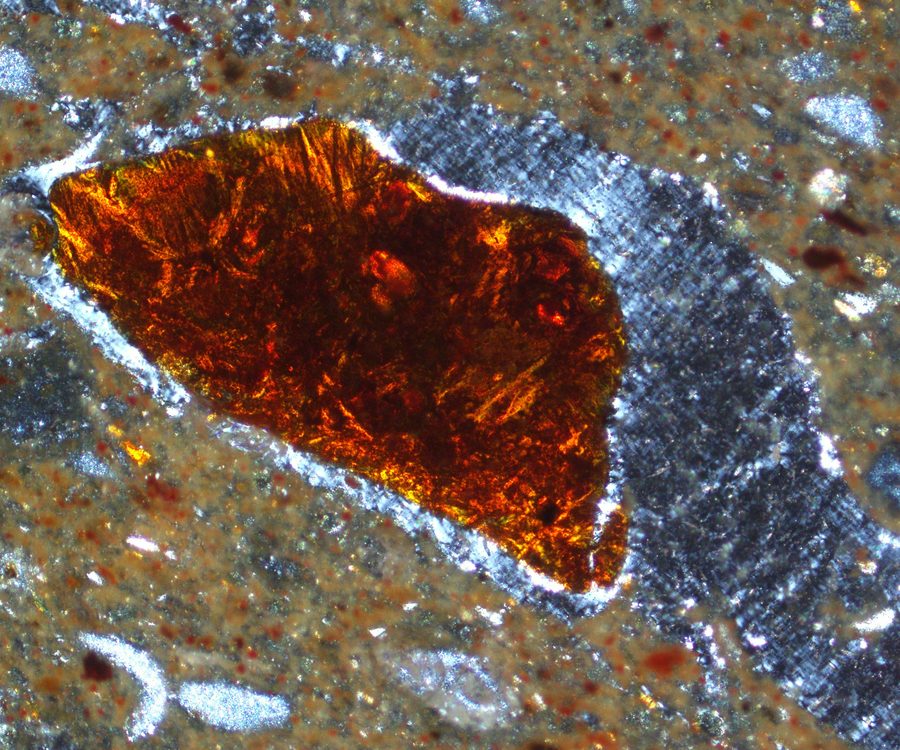
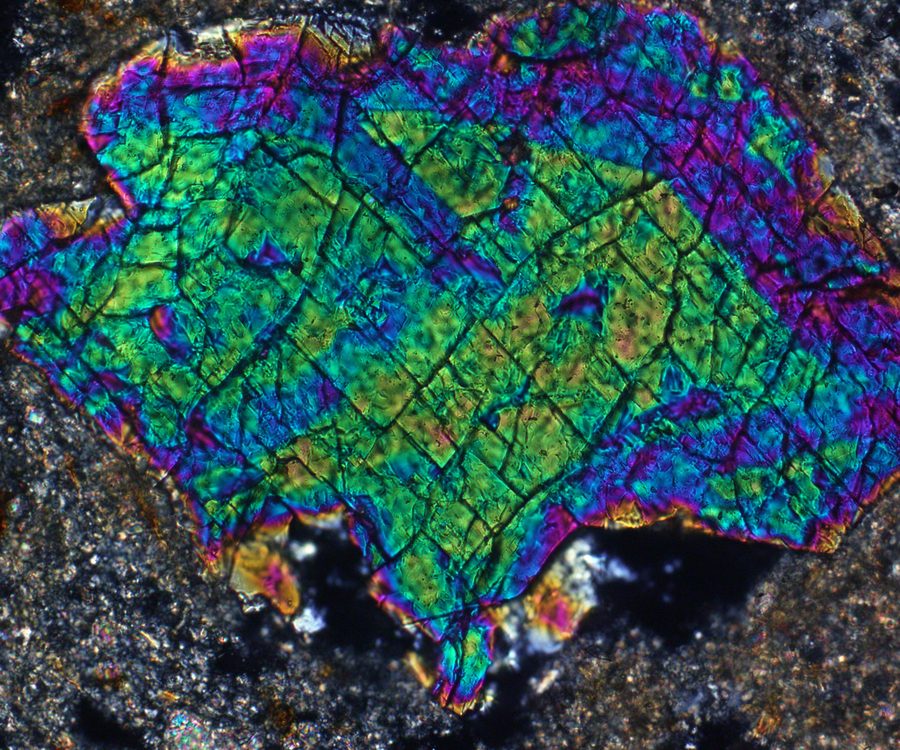
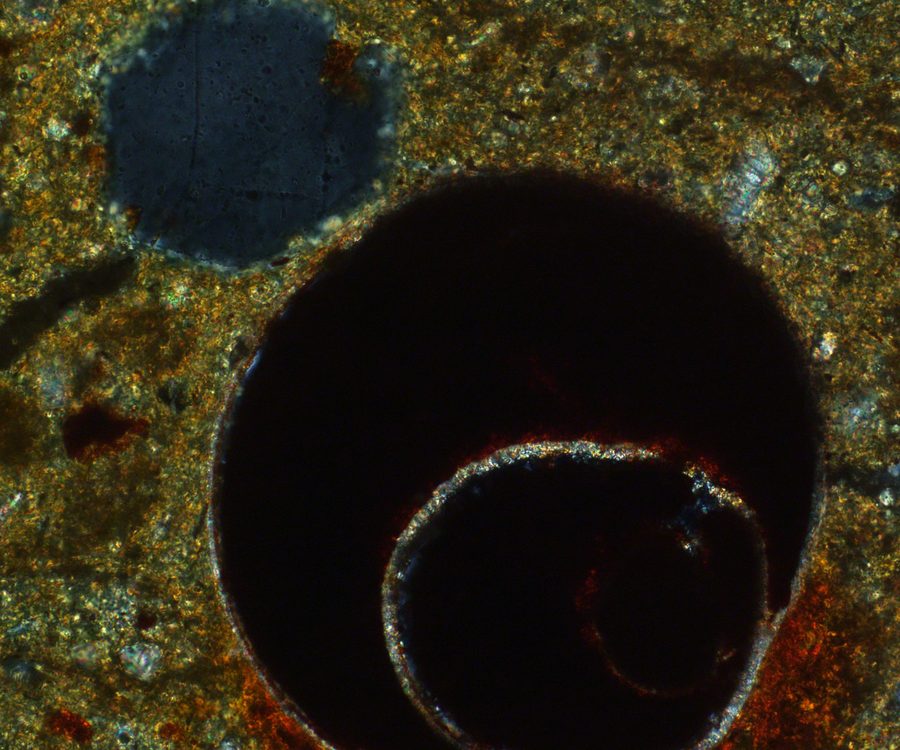
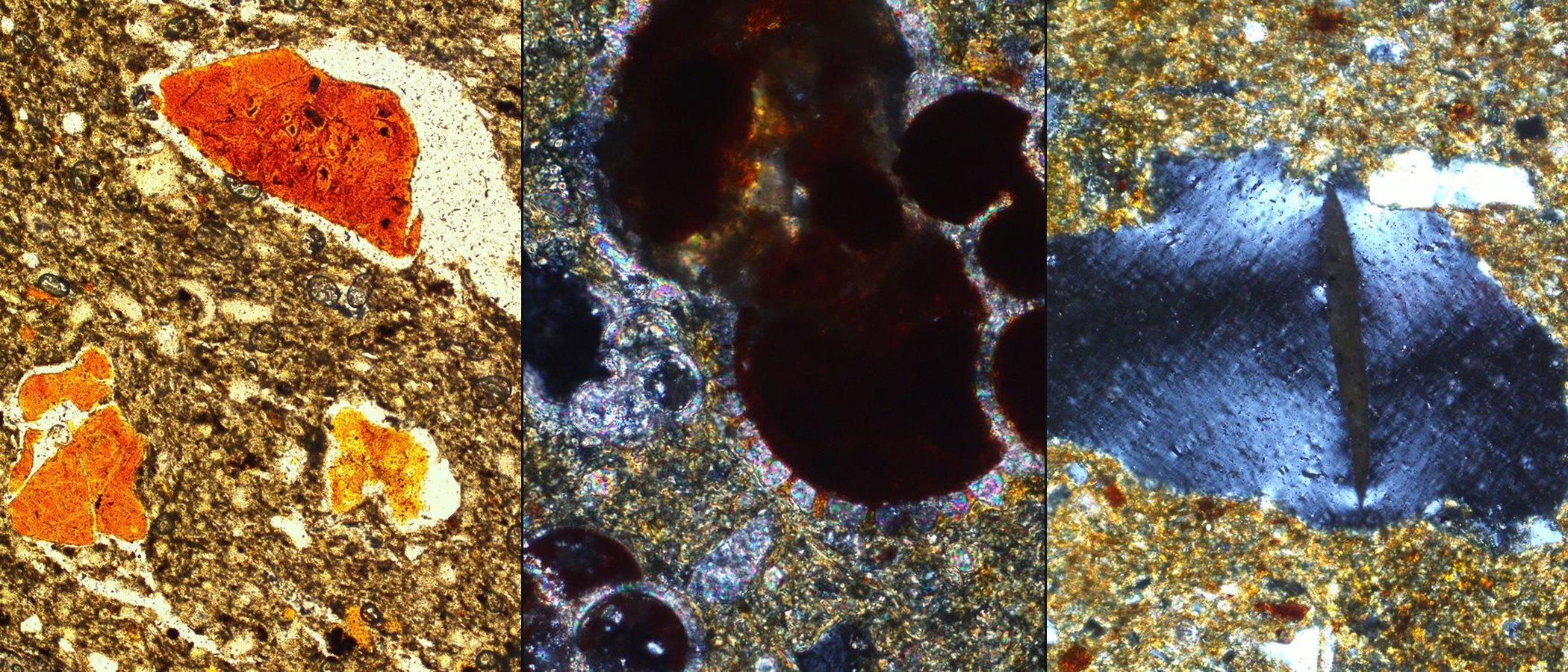
Background: thin sections under crossed polarizers (XPL)
Research aims
- Identifying ancient production centers and technologies
- Identifying historical connections and trade relations
- Sourcing the transport containers of harbor sites and the maritime exchange behind them
- Reconstructing the daily habits and routines of the people of a site
- Tracing chronological trajectories in production and exchange
About the lab
Waiman-Barak Archaeometry provides provenance and technology studies of archaeological ceramics, raw materials, and sediments such as mudbricks and clay installations. Every project is studied, interpreted, and written up by Dr. Paula Waiman-Barak, from the first look at the fresh breaks to the publication-ready text.
The lab's approach rests on robust datasets. Large, well-chosen sample sets, studied alongside geological raw materials from the research area, give reliable answers about where vessels were made, how they were produced and fired, and how they moved between communities.
Dr. Paula Waiman-Barak
Paula is a ceramic petrographer and archaeometrist. From 2020 to 2026 she headed the Ceramic Petrography Laboratory at the Sonia and Marco Nadler Institute of Archaeology, Tel Aviv University. Her doctoral research dealt with Phoenician exchange dynamics, followed by a postdoctoral fellowship on Iron Age Cypriot ceramics. Her work centers on the Eastern Mediterranean, in particular the Levant and Cyprus from the Iron Age through the Hellenistic period.
Reference collection
The lab holds a reference collection of about 5,000 Eastern Mediterranean samples: thin sections, pottery, and soils from Israel, Jordan, Egypt, and Cyprus, among other regions. New material is compared directly against it.
Levantine Ceramics Project
The lab collaborates with the Levantine Ceramics Project (LCP), an open-access online resource for ceramic data. At the client's request, and for an additional fee, the petrographic data and photomicrographs of a project can be uploaded to the LCP.
Research grants
The lab also supports the preparation of research grant applications, including the design of the sampling strategy, the analytical program, and the budget for the archaeometric component.
Methods
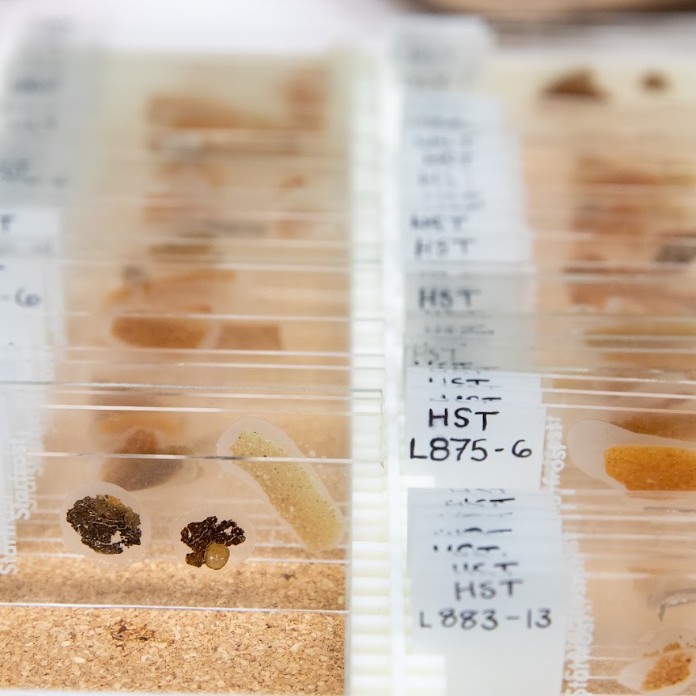
Petrography In-house
Ceramic petrography is a well-established analytical method for determining the mineralogical composition of clay artifacts, identifying production techniques, and pinpointing the geographical provenance of materials. Because ceramics were cheap to make and broke often, they survive in great quantity and record the cultural, economic, and technological choices of potters, merchants, and consumers. The thin sections are prepared by external specialist laboratories. They are then studied in the lab under the polarizing microscope and documented with high-resolution photomicrographs.
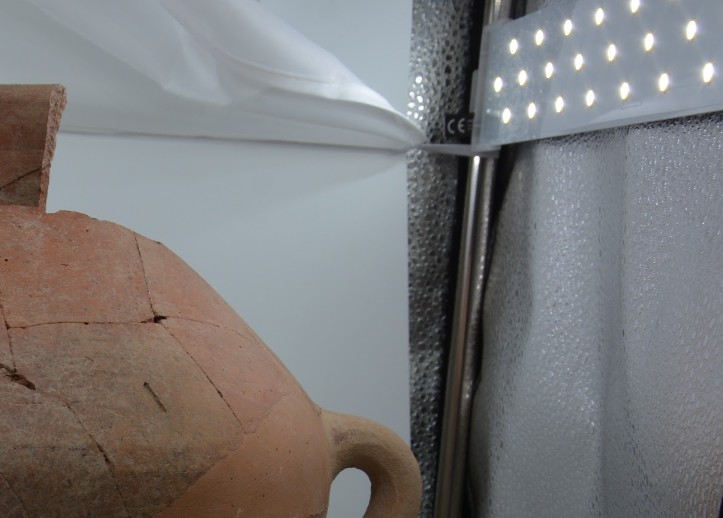 DocumentEvery vessel is photographed before sampling.
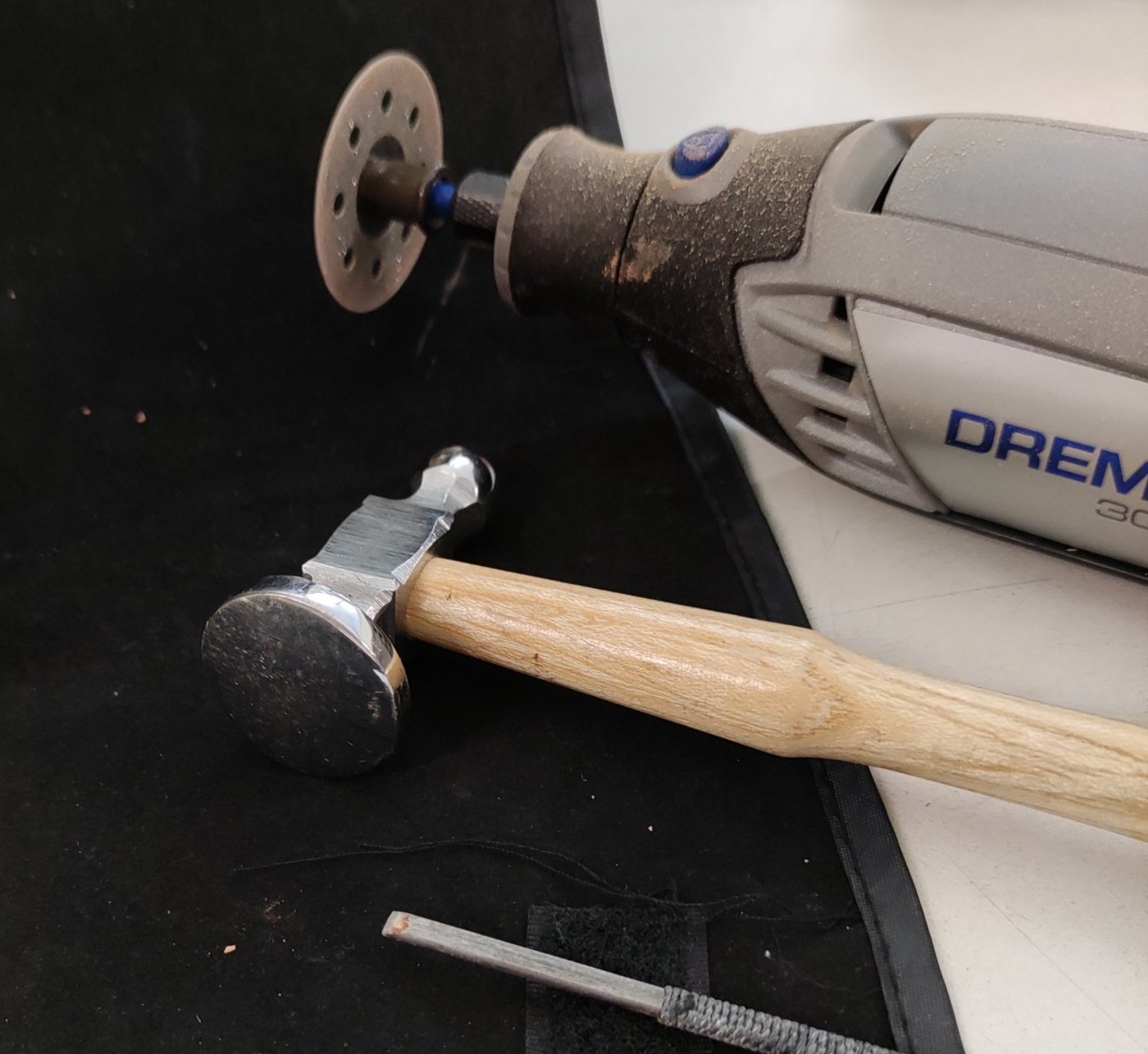 SampleA small chip is enough for a thin section.
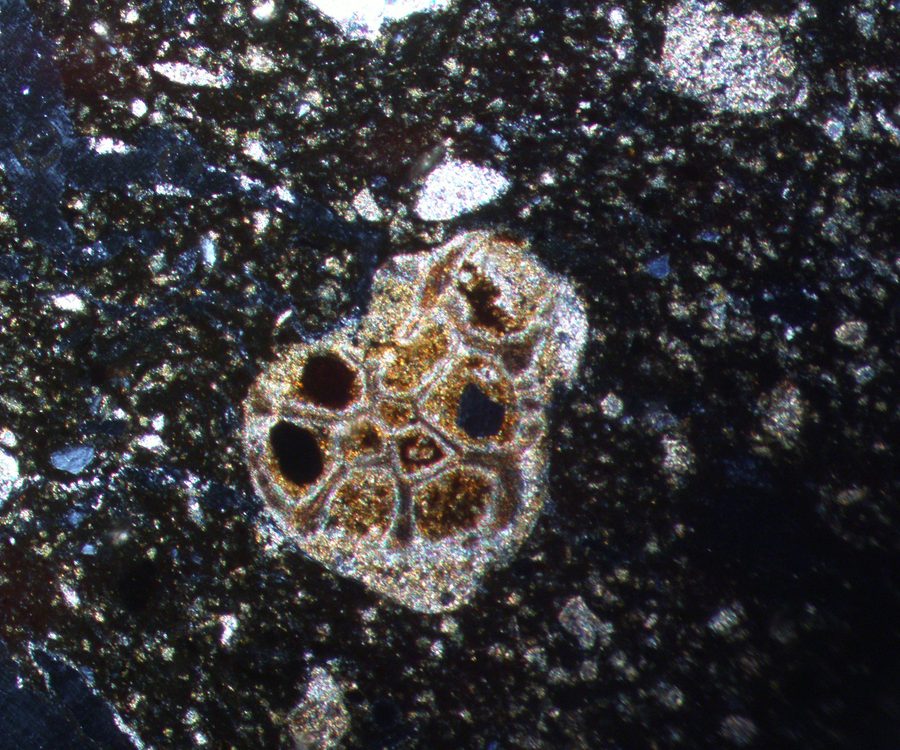 ReadThe thin section is studied under the polarizing microscope.
FTIR spectroscopy Partner laboratory
Fourier-transform infrared spectroscopy rapidly characterizes the mineralogical composition of ceramics and sediments and is used to estimate firing or burning temperatures. It identifies minerals that cannot be detected under the petrographic microscope and distinguishes crystalline from non-crystalline phases. It is effective on ceramics, mudbricks, sediments, pigments, and organic substances.
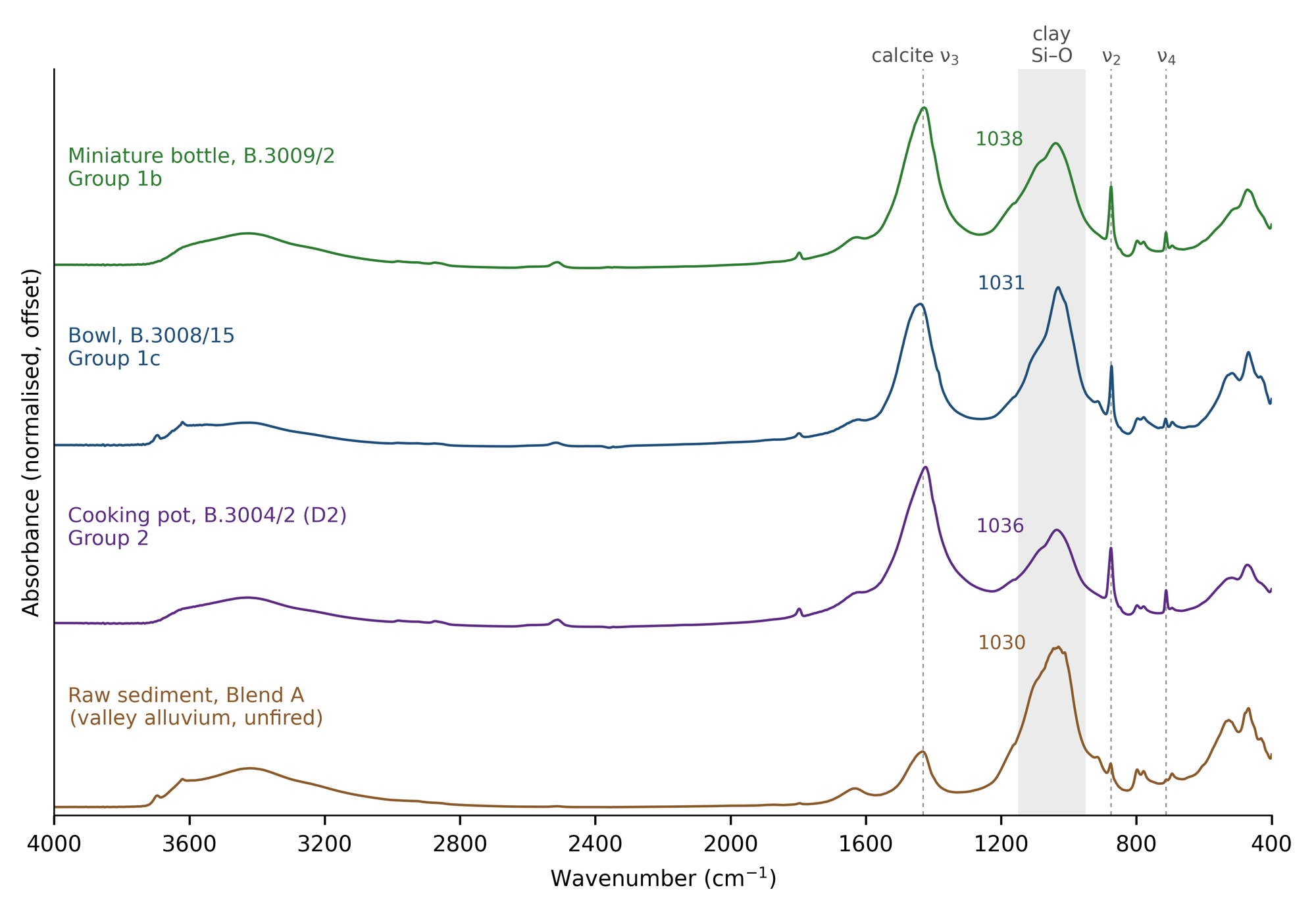
XRD, SEM-EDS, and FTIR Partner laboratories
X-ray diffraction (XRD) identifies the crystalline minerals in a sample, including phases that neither petrography nor FTIR can distinguish, and shows which minerals formed or broke down during firing. XRD does not detect amorphous (non-crystalline) material, so it is used together with FTIR, which does.
Scanning electron microscopy with energy-dispersive X-ray spectrometry (SEM-EDS) images the ceramic body at high magnification and measures the elemental composition of selected points, from the clay matrix and temper to individual microfossils.
The two methods complement each other: XRD characterizes the sample as a whole, and SEM-EDS examines chosen features within it.

FTIR, XRD, and SEM-EDS are measured at partner laboratories. The data are then analyzed in the lab and combined with the petrography into a single interpretation.
Recommended analytical protocol
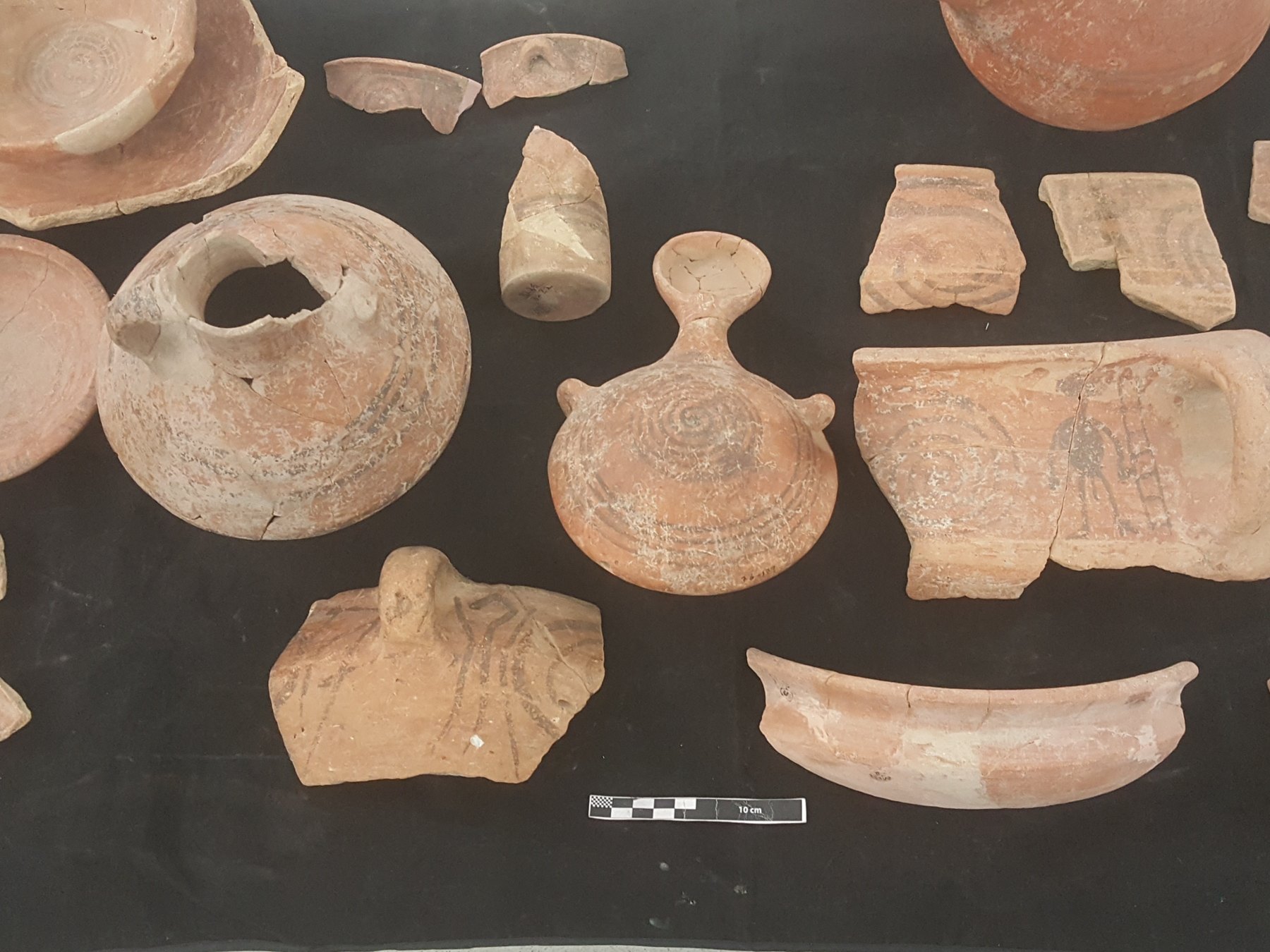
Pottery from Tell Qasile. Courtesy of A. Mazar; published in Excavations at Tell Qasile, Part Three: The Iron Age Town (Qedem 66, 2026)
Pottery and archaeological sediments
For a comprehensive picture of regional pottery production, samples are selected to represent the types and chronological phases identified in the macroscopic and typological study. Common local vessel types characterize local production and its traditions. Suspected imports are examined to understand regional connectivity. Which analyses are applied to which samples is decided for each project.
Geological surveys
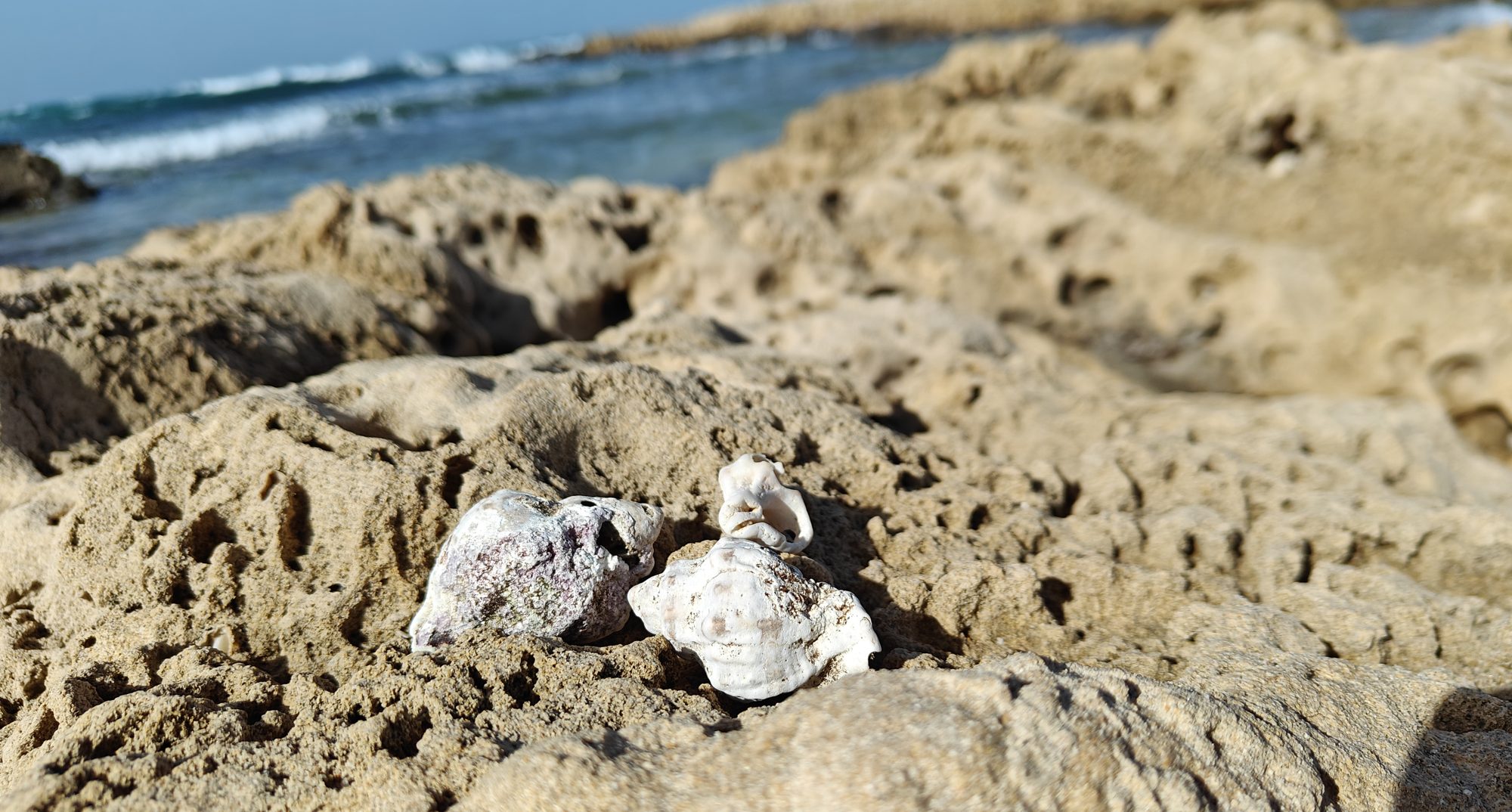
The landscape around a site is the potter's raw-material store.
As an option, the lab carries out a geological survey of the surroundings of the site. Potential raw materials such as clays, soils, sands, and rocks are located, described, and sampled in the field, so that the pottery can be compared with what was available locally.
The survey samples join the analytical program of the project and can be used for firing experiments. Survey days are charged per day, and the samples are priced as regular samples.
Surveys are also carried out abroad, at the same day rate with travel expenses added.
Geological samples
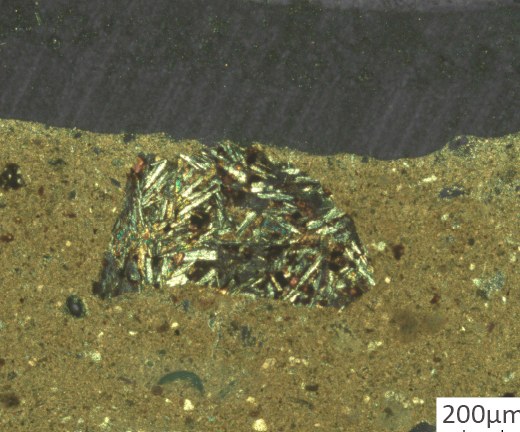 600°C
600°C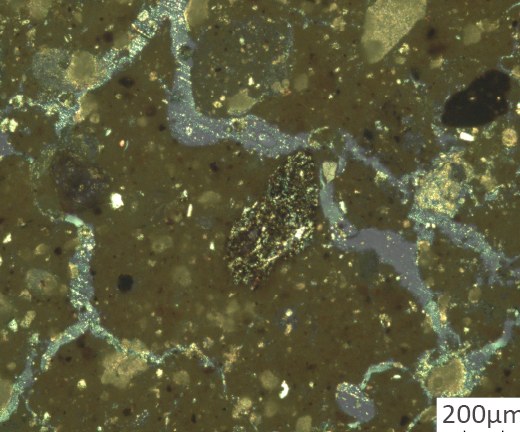 800°C
800°C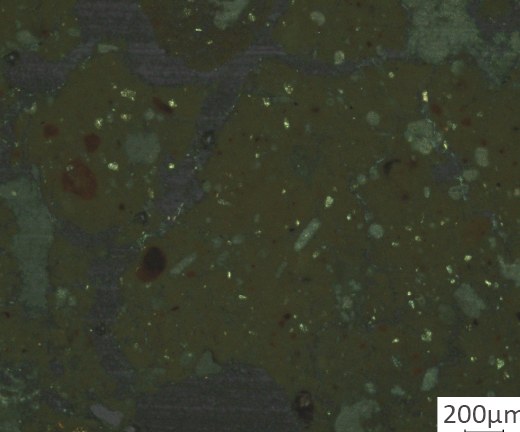 900°C
900°CPotential raw materials for ceramic production are collected in the research area and used as references. At least two soil samples are recommended for every project. In firing experiments the samples are dried and then fired at 600°C, 700°C, 800°C, and 900°C to observe the mineralogical transformation from sediment to ceramic.
Working with the lab
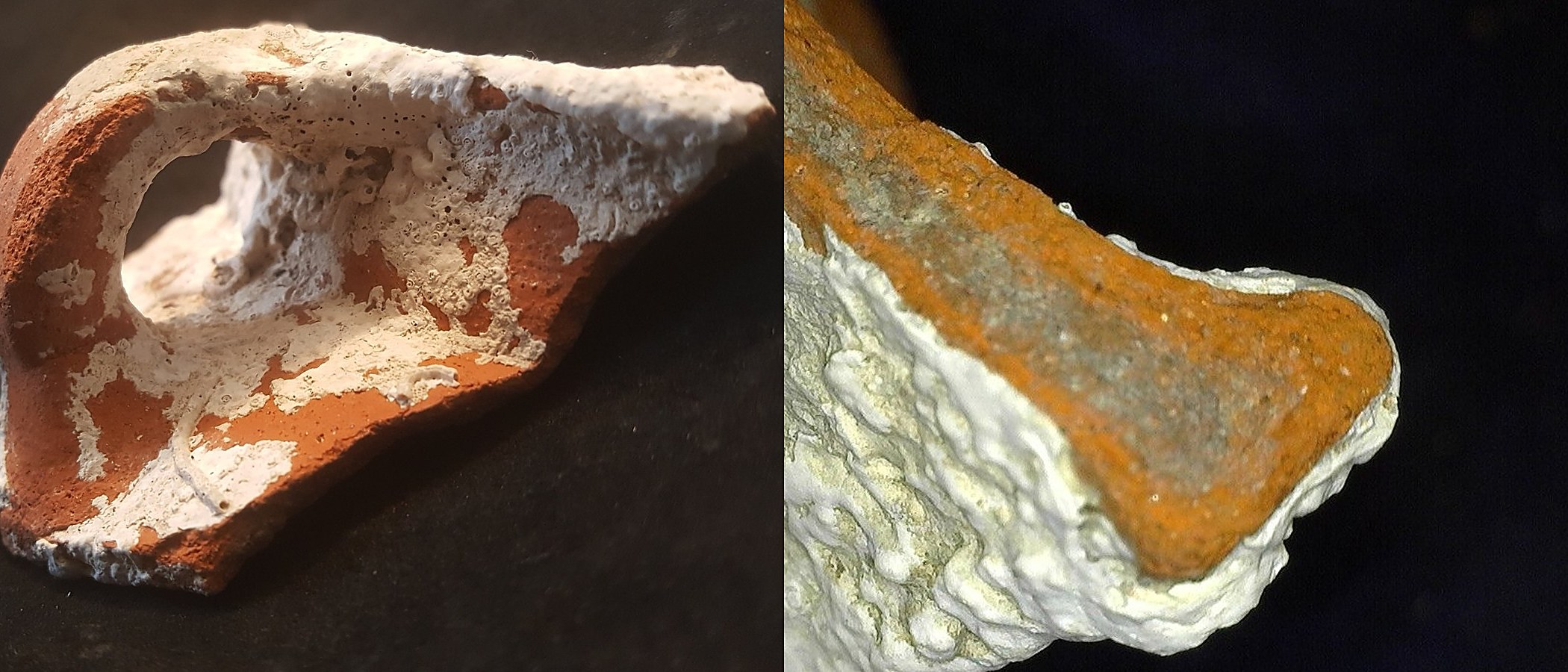
Cooking pot from Akko, Harbor, in the Levantine Ceramics Project
Projects are accepted subject to topic and timetable availability. The number of samples is set together with the excavator according to the research question and the budget. Dr. Waiman-Barak is an author of every research output from the lab.
What you receive
- A complete written report
- A detailed spreadsheet with all results
- Ready-to-publish graphics, including photographs of vessels and fresh breaks and photomicrographs of the thin sections
Publication
The end product is a text that can stand as a chapter in the final archaeological report, or serve as the lab's contribution to a peer-reviewed journal article on which Dr. Waiman-Barak is a secondary author. For sample sets of more than 100 samples, she leads a peer-reviewed paper herself at no extra charge. For smaller sets, leading a paper is possible by agreement at additional cost.
Number of samples
The recommended minimum is 30 vessels. Smaller sample sets are accepted, with additional fees for advising, field and sampling days ($330 per day) and for writing the report ($980).
Sending samples
Sample dimensions
Outlines are drawn to relative scale. Please write before shipping samples to receive the shipping address and packing instructions.
Facilities
- Zeiss Axiolab 5 polarizing microscope with a dedicated Axiocam digital camera for publication-quality photomicrographs
- Zeiss Discovery V8 stereo microscope for documenting fresh breaks
- Dino-Lite digital microscope for field recording
- Reference collection of about 5,000 Eastern Mediterranean thin sections, pottery, and soil samples, including Israel, Jordan, Egypt, and Cyprus
- Thin sections prepared by external specialist laboratories
- FTIR, XRD, and SEM-EDS through partner laboratories
Contact
To discuss a project, write with a short description of the site, the assemblage, the research question, and the approximate number of samples.
- paula@waimanbarak.com
- Location
- Zikhron Ya'akov, Israel